Hi everyone! I'm Kabir, an international member of the class of '26, from New Delhi, India. I'm thinking of majoring in Psychology and Film & Media Studies. Outside the classroom, I enjoy watching movies, going on hikes, hanging out with my friends, and going on runs (if you see me on the streets of Hanover, say hi!) In the short while I've been here, I've come to love Dartmouth, so if you're interested in what I have to say, stick around! This should (hopefully) be fun :)
Something that separates Dartmouth from most schools in the United States, beyond its rural setting, strong focus on community, and student body, is definitely its teaching format. Dartmouth follows a modified version of the quarter system, called the D-plan. For anybody unfamiliar — most colleges follow a semester system, where there are two semesters throughout the year (usually fall and spring), made up of 16-week terms.
At Dartmouth, however, we follow the D-Plan, which consists of three terms of ten weeks (usually fall, winter, and spring). This is markedly different from semester system schools, meaning we have different timelines for holidays, course selection, midterms, and finals weeks. The quarter system, coming to Dartmouth, definitely made me nervous. As a first-year, I felt like I would be isolated from my friends who go to semester schools, who could relate on a somewhat shared schedule while I would have something completely different.
I couldn't have been more wrong though. One term down, I believe that the quarter system is an absolutely fantastic method of teaching. Let's go through what I believe to be its pros.
Firstly, I think that the quarter system helps you expand and make proper utilisation of Dartmouth's liberal arts curriculum. The liberal arts find their roots in encouraging students to move beyond their field of choice and have a more holistic education. With three terms, as opposed to the typical two, each year, students get to explore more courses, subjects, fields, and areas of study and exploit the college's resources to its fullest. I have friends in the Biology major taking an astronomy course next term, and friends in the Film major taking mathematics classes! This intersectional approach to education, I believe, is possible only through Dartmouth's educational structure.
Secondly, the term moves faster. This comes with a caveat: some people could definitely find the fast-paced teaching difficult, but I promise: once you get used to it, it's great. A lot of students across semester schools complain about feelings of boredom creeping into their classrooms, and that's completely understandable: when you spend 16 weeks each year focusing on the same syllabus, it can start to feel repetitive and claustrophobic. With Dartmouth's ten weeks, there's a quick turnover. If you love a class, you can digest all of its information at a rapid pace; if you feel like you might be struggling (and that's completely fine), you only have to stick it out for a couple of weeks!
Finally, the quarter system truly enshrines what I believe is a work hard play hard mentality. With Dartmouth's D-plan, we start midterms early (my first one was on a Monday in Week 3 of classes!). But this rapid structure, what I call "work hard", is counterbalanced by the ample amount of holidays we get. Our winter break is far longer than most universities, and we have a hefty amount of time dedicated to spring break too! This is the "play hard" mentality I was talking about. The D-Plan truly commits to holistic growth of students, and that's why I've honestly come to love it.
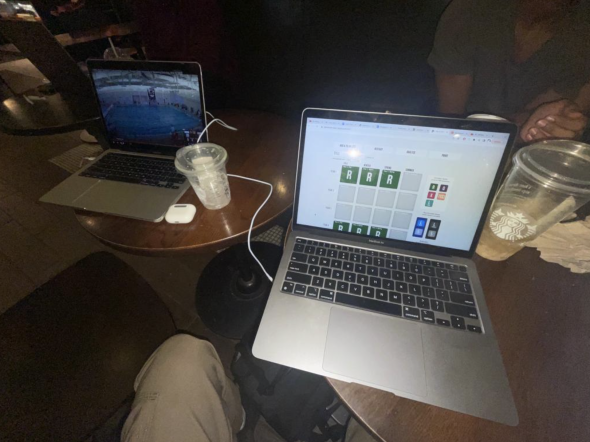
And the college has tools to help you navigate it as well! Pictured above is the "D-Plan game" that all incoming first-years get to play. Through it, one can modify their schedules and see what it would mean in terms of credit obtainment.
I love the D-Plan, and I genuinely think you will too.
If you are interested in pursuing medicine after graduating from high school, as I was, you'll be looking at how different universities design their "pre-health" experience. What does that experience look like at Dartmouth College?
Welcome back to Open Doors—your inside look at life in the Woods! This week, Isabelle Sullivan '26, an environmental studies and geography major, showed me around her room, where we discussed Dartmouth residence halls, classes, and campus life.
There was never a single "aha!" moment of clarity when I knew that Dartmouth was right for me, yet now, it is impossible for me to imagine having chosen anywhere else.
From a tight-knit study abroad cohort to intimate classroom moments and inspiring literary talks, French has grown far beyond a minor — becoming a thread that runs through the most meaningful parts of her Dartmouth life.
Amid the whirlwind of a ten-week term, the quietest moments — studying in the sun, cooking with a friend, running through Pine Park — turn out to be the ones worth savoring most.