Welcome to the woods! Dartmouth is hands-down my favorite place, and I look forward to coming back every term. I'm not even kidding. After a day and a half of traveling, I step off the Dartmouth Coach and breathe in the crisp Hanover air. Dragging my two humongous suitcases, I trudge across campus, climb three flights of stairs, fumble for the key in my pocket, and finally open the door to my new corner dorm. I let out a sigh of relief at the sight of my bare twin XL mattress.
Dartmouth's liberal arts curriculum provides all first-year students an opportunity to improve their expressive writing skills through a required First-Year Seminar course. This intensive writing class introduces students to college-level essays, the research process, and Dartmouth's resources. On top of that, the variety of topics covered allows students from different disciplines to explore and select the course that best suits their interests.
I'm taking my First-Year Seminar course, Global Traditions of Puppetry (COLT 07.20), with Professor Michael Wyatt and I'm having such a great time! To prepare for class, I do weekly readings of a chapter in Kenneth Gross' Puppet: An Essay on Uncanny Life. The chapters are around 10 pages long, and they're focused on different aspects of a puppet's relationship with the puppeteer and the audience. I've never been this intrigued by puppet theatre before. On top of that, we also watched a 100-year-old shadow puppetry film and an episode of Kukla making lemonade in Kukla, Fran and Olie. These activities are then followed by an open discussion that draws connections between the new material and previously visited topics. Since First-Year Seminar courses are capped at 16 people, all my classmates and I are able to voice our opinion without any restrictions. Honestly, I've never imagined having a serious conversation about puppets, but this class makes it possible and enjoyable. With students coming from different cultural backgrounds and various academic interests, the discussions are quite rich. One time, we had an hour-long debate about the meaning of a puppet's 'thingness' and uncanniness—claims and arguments are backed by facts from various readings as well as personal anecdotes.
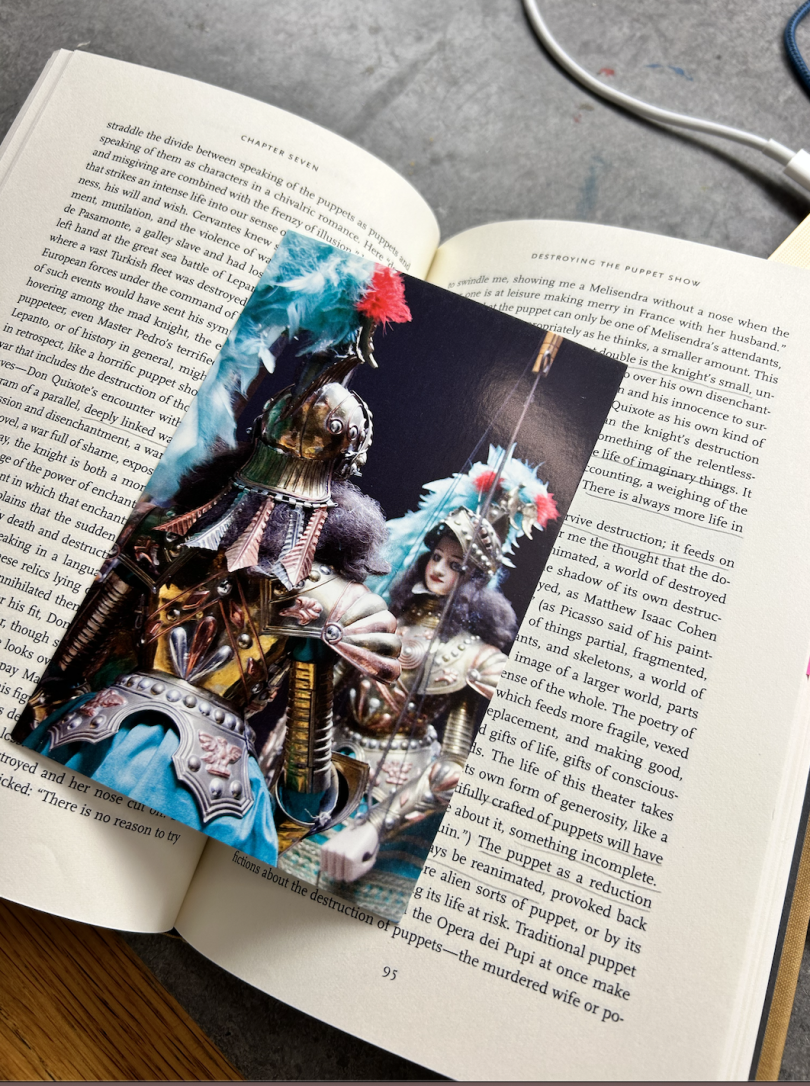
To make the class even more engaging, our professor invited a group of puppeteers from Figli d'Arte Cuticchio (in Italy) to perform Sicilian puppet theatre (Opera dei Pupi) right in Dartmouth Hall! One of my most exciting moments at Dartmouth occurred this past Tuesday when I got to watch Sicilian puppets enacting La Storia Del Soldato, a version of the Faust legend. This exclusive performance features two main puppets, a soldier and the devil, as well as three experienced puppeteers and Mimmo Cuticchio himself! To make the experience as memorable as possible, Cuticchio narrates the journey of the soldier all in Italian while the talented live orchestra directed by Filippo Ciabatti adds suspense to the story. On top of that, our professor invited Cuticchio and all puppeteers to join us in class for a short Q&A session. In two hours, we covered Cuticchio's history with Sicilian puppet theatre, his adaptation of it after a war in Italy, and the meaning behind the puppets' intricate designs. Moreover, he shared his perspective on living with more than 1,200 puppets as a master puppeteer. The best thing, however, is he said that we were the first and only people to see his version of La Storia Del Soldato!
A postcard I received in class from the puppeteers!
This week was such an amazing experience, and I hope you consider taking this class when you have the chance.
Curious about the requirements needed to complete your plan of study at Dartmouth? Come explore with me what each distributive requirement means at Dartmouth!
As my friends and I navigate complex feelings of nostalgia and excitement, we all have very different senior springs. Find out what I have been working on and what it has taught me!
True to the theme of a liberal arts education, Dartmouth requires students to take one or two classes each in several different subject matters, or distributives, in order to graduate.