Hi there! I'm Nathan, a '27 from Lynn, MA (just outside Boston). I'm majoring in Engineering Sciences modified with Studio Art—I like to understand, design, and create things. I also love writing, photography, and being outside (hence this blog). On-campus, I'm involved in the startup scene through the Magnuson Center for Entrepreneurship, as well as the Triathlon and Cycling Teams. Outside of class, you'll probably catch me drinking coffee somewhere or out on my bike.
If you haven't heard of maple sugaring before, it's the process of extracting sap from maple trees and boiling it down to make maple syrup! The season for sugaring is very short, as daily temperatures need to be above freezing during the day and below freezing during the night (in order to generate the pressure differential required for sap to flow). It just so happens that the season lines up with Dartmouth's spring break, so I had the opportunity to make some syrup and explore the maple industry!
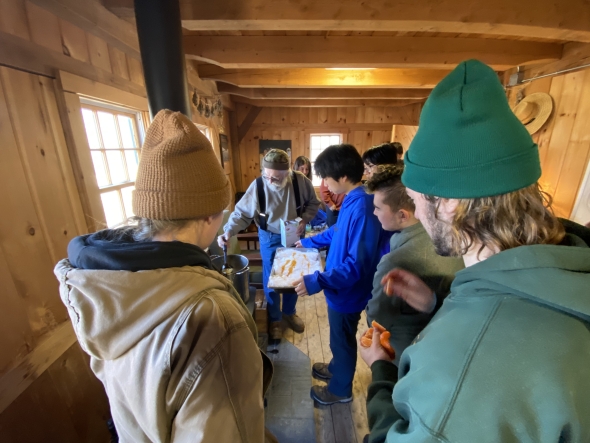
We started the break with a visit from Chief Nathan, a local from the Abenaki tribe who's been sugaring his whole life. He told us about the indigenous origins of maple in the Upper Valley and the growing impacts of climate change on sugaring, and he recalled some mouth-watering maple recipes. Speaking of which, he made a special treat called "maple on ice," which is extra-thick, hot syrup poured on a layer of snow—it was, well, sweet!
Making syrup on ice! (which turns the liquid to a taffy-like consistency)
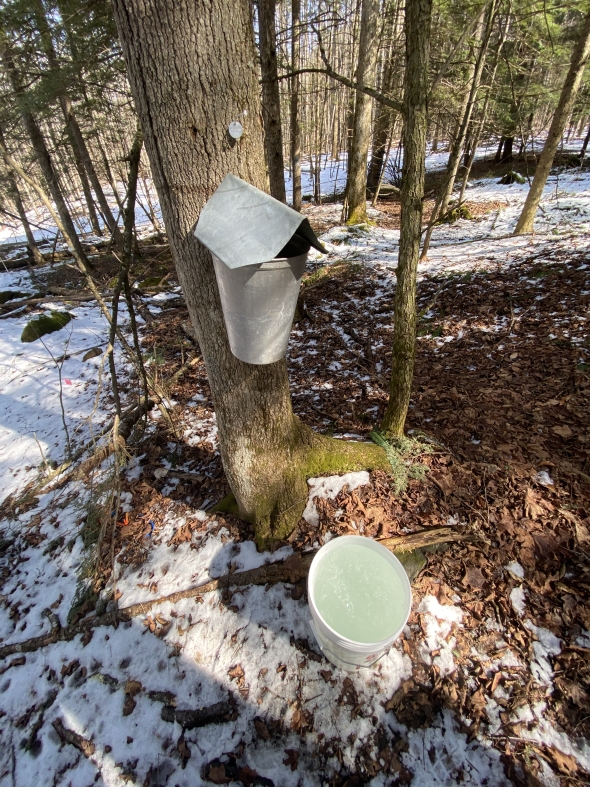
Then we had a few days of actual sugaring; we went to the O-Farm (aka Dartmouth's Organic Farm) and walked over to "the sugarbush," which is simply the stand of maple trees that the organic farm taps. What are taps, you may ask? Taps are the small holes bored into the outer layer of the tree, which let the sap run out for collection. It's through these small, one-inch-deep holes that we were able to collect hundreds of gallons of sap. The two methods of transport that got our sap to the Sugar Shack (the building housing our evaporator) were lines and buckets. Lines are simply long tubes and hoses that bring the sap down to a main collection tank via the force of gravity, and buckets are, well, buckets (which we had to lug to collection stations).
A tapped maple tree and collection bucket on display.
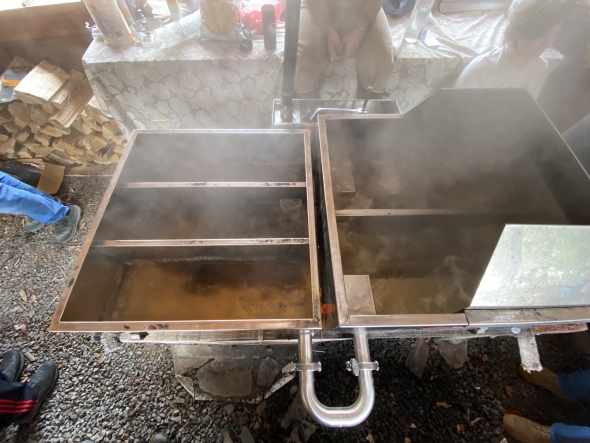
We also did quite a bit of boiling, which consisted of constantly stoking the fire and occasionally taste-testing our syrup. Our evaporator also had a temperature gauge that indicated whether or not the sap was ready to be drawn, and we had a special tool called a "hydrometer" to test the density of the liquid. But between keeping the heat of the fire going and occasionally checking up on our syrup, we got into deep conversations and reflected upon our experiences at Dartmouth.
The interior of the Sugar Shack is a warm, steamy place that always smells like maple syrup.
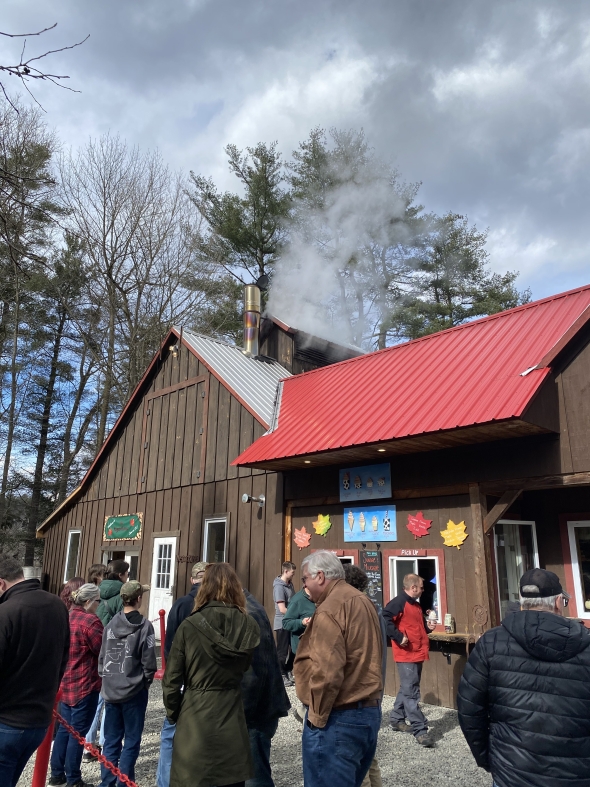
On the weekend we went to Mac's Maple festival and tried Maple creamies, which are arguably one of the best maple products there is (especially considering the fact that Mac's Maple is simultaneously a dairy farm and sugaring operation). The festival also provided distinctly local vibes and allowed me to experience regional culture outside of the Dartmouth bubble.
The fabled Mac's Maple Sugar Shack and its creamie booth.
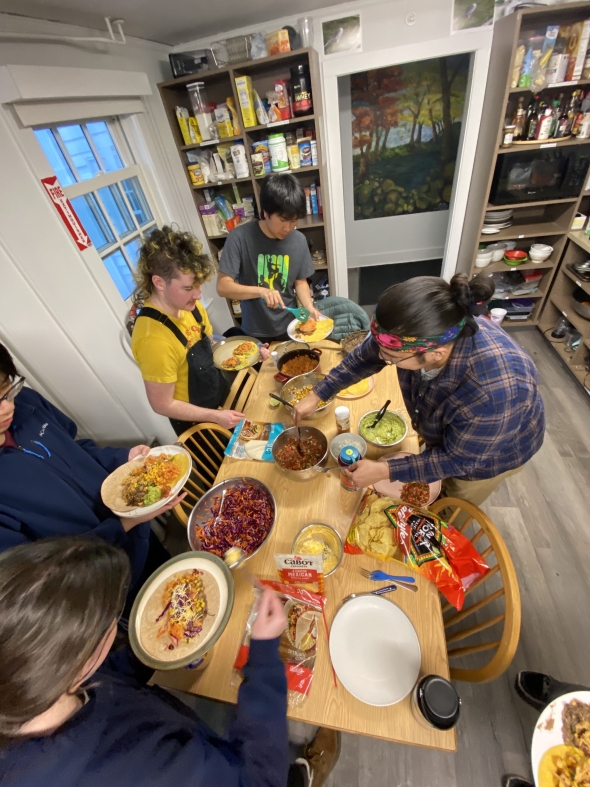
Every night, we made our way back to the Sustainability Living Center (SLC), a Living Learning Community (LLC) that provides low-waste housing with a fully outfitted kitchen, to make a delicious meal from scratch. Cooking with the crew was a great way to connect, and the deep conversations started in the Sugar Shack continued late into the night!
Welcome back to Open Doors—your inside look at life in the Woods! This week, Isabelle Sullivan '26, an environmental studies and geography major, showed me around her room, where we discussed Dartmouth residence halls, classes, and campus life.